
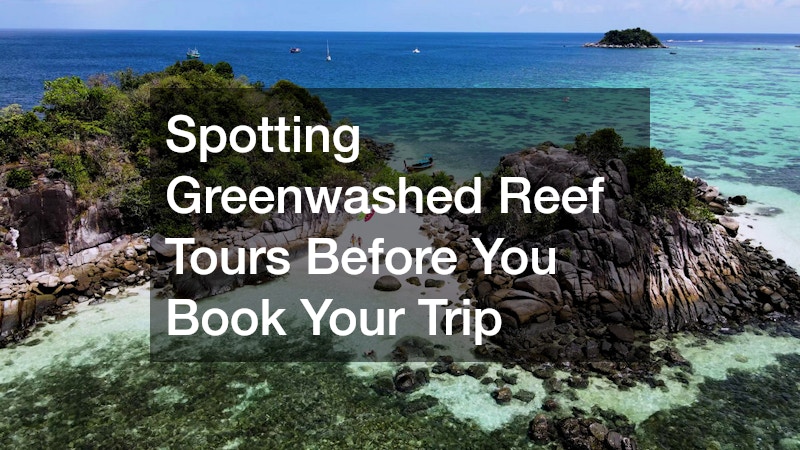
Coral reefs cover less than 1% of the ocean floor yet support roughly 25% of all marine species. That ecological significance has made reef tourism a booming industry — and a magnet for marketing language that rarely survives close inspection. Operators describe themselves as “eco-certified,” “reef-safe,” and “conservation-focused” with little accountability behind those words.
For travelers who want their dollars to support genuine reef protection rather than undermine it, the challenge is learning to separate credible commitment from carefully worded positioning.
Why Greenwashing Thrives in Reef Tourism
The reef tourism market grew rapidly over the past two decades, and certification frameworks struggled to keep pace. Unlike aviation or food labeling, reef tour operators face no single federal standard governing what “eco-friendly” means on a booking page. That regulatory gap is the root cause of the problem.
Operators know that environmental language converts bookings. Studies tracking eco-label effectiveness have found that travelers pay a meaningful premium — sometimes 10 to 20 percent more — for tours claiming sustainable practices. That financial incentive pushes companies toward environmental branding even when the operational reality doesn’t support it. The marketing cost of adding “reef-safe” to a homepage is zero; actually reformulating sunscreen policies, retooling boat anchoring systems, and training guides takes sustained investment most operators don’t make.
What makes this particularly difficult for travelers is that greenwashing rarely involves outright fabrication. It works through omission and vagueness. An operator might say they “care deeply about reef health” without a single concrete practice behind that statement. Another might display a badge from a certification body that charges operators a flat fee for listing without any site inspection. The difference between genuine accreditation and a pay-to-list directory logo is invisible at a glance.
Red Flags in Tour Descriptions and Certifications
Reading a tour listing critically is the most practical tool available before booking. Several patterns signal that sustainability claims deserve skepticism.
Vague language with no operational specifics is the most reliable indicator. Phrases like “we minimize our environmental impact” or “we give back to the reef” describe intentions, not practices. Credible operators describe exactly what they do — maximum group sizes capped at 8 divers per guide, reef-safe sunscreen provided to guests, GPS anchor buoy systems that keep chains off coral, or partnerships with named research organizations that involve documented work hours.
Certifications need to be verified, not just noted. The two most widely recognized reef and marine tourism certification bodies with site-inspection requirements are Green Fins, administered through the Reef-World Foundation, and the Reef Check program. If an operator claims certification from a body you haven’t heard of, look up that body independently before booking. If its website shows a simple application form with no inspection process described, treat the badge as marketing rather than accountability.
When evaluating operators, asking three direct questions before booking tends to reveal a lot quickly:
- Ask for the name of the certification body and the year of the most recent audit — a genuine operator will answer both without hesitation.
- Ask whether the tour caps group size per guide, and what that number is — responsible operators use ratios no higher than 8 divers to 1 guide for reef dives.
- Ask what sunscreen policy applies and whether compliant product is provided or just recommended — operators who enforce a reef-safe policy typically supply it rather than leaving compliance to individual guests.
On-the-Ground Warning Signs You Can Observe
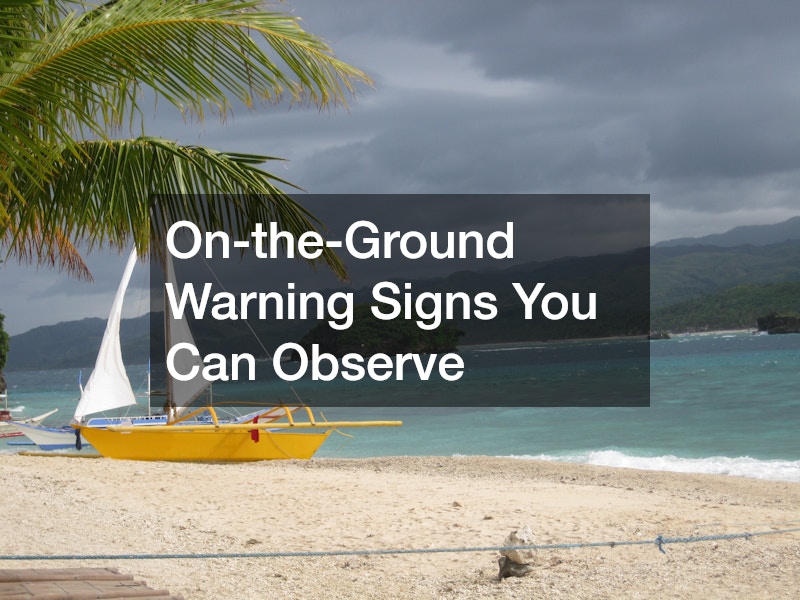
Even with pre-booking research, arriving at the dock tells its own story. The condition of the equipment, how guides speak to guests before entering the water, and small behavioral signals from crew reveal whether the operation matches its marketing.
Watch how the boat anchors. Operators running legitimate reef-protection programs almost universally use mooring buoys rather than dropped anchors. A chain dragging across coral causes physical destruction that can take decades to recover, and any operator serious about reef health knows it. If you observe a free anchor deployment at a reef site, that practice contradicts any conservation claim the operator made.
Guide behavior during the dive or snorkel is equally telling. Guides at genuine eco-operations don’t touch coral, don’t handle marine animals, and actively discourage guests from doing so — not after the fact, but with a pre-water briefing that covers these rules explicitly. Groups of 15 or more snorkelers with a single distracted guide, no pre-water briefing, and no sunscreen policy in place represent a pattern that appears in operators who’ve adopted environmental language without the practices.
The comparison that matters here is straightforward. Operators with genuine reef commitments typically charge more, move slower, and limit the number of guests on any single trip. Operators who’ve optimized for volume at lower price points often use sustainability language to compete without sustainability costs. A tour priced 30 to 40 percent below market rate for the same itinerary should prompt real scrutiny — that gap usually reflects corners being cut somewhere in the operation.
A reputable travel agent who specializes in marine travel can often tell you which operators have a track record versus which ones are relatively unknown quantities, since agents who book reef tours regularly hear post-trip feedback that never makes it onto review platforms.
Using Reviews Without Being Misled by Them
Review platforms are useful but require careful reading. Greenwashed operators often accumulate positive reviews because most guests can’t tell, in the moment, whether the reef below them is being harmed. A beautiful dive with clear water and abundant fish doesn’t mean the operation is ecologically responsible — it means the site hasn’t visibly degraded yet.
Look past star ratings to the content of reviews. Search for language about group size, guide behavior, and what happened if guests violated environmental guidelines. Reviews mentioning that guides corrected harmful behavior, enforced no-touch rules, or cut a dive short because conditions weren’t right signal genuine reef stewardship. Reviews that enthusiastically describe feeding fish, touching turtles, or collecting shells should be read as warnings, not endorsements.
Cross-referencing two or three independent platforms — rather than relying on a single source — also filters out review clusters that operators sometimes generate artificially. If an operator has 200 five-star reviews on one platform and a much more mixed record elsewhere, the disparity itself is informative.
Making the Booking Decision With Confidence
The practical filter comes down to specificity. Any operator that can name its certification body and audit date, describe its anchoring system, state its group size limits, and explain its sunscreen enforcement has answered the questions that matter. Operators that respond to those questions with generalities haven’t built an operation that needs specific answers.
Spending an extra $40 to $80 on a verified operator isn’t just an ethical preference — reefs degraded by high-volume, unregulated tourism become worth less to everyone, including future travelers. Choosing carefully supports the market condition where genuine conservation practices become the competitive standard rather than the exception.